


...


.png)

Category One includes unincorporated organisations or groups that are not legally incorporated and do not operate as separate legal entities. These groups can be informal and may include committees, working groups, reference groups, task forces, advisory groups, or community-led initiatives.
Unincorporated organisations or groups that sit under an incorporated parent organisation are still eligible for Category One. This is provided that your governing body (decision-makers) is not the board of directors of that incorporated body.
This category includes:
- Indigenous-led organisations or groups such as associations, committees, working groups, programs, Elder councils, or other initiatives (at least 51% of the governing body must be Aboriginal and/or Torres Strait Islander peoples).
- Not directly incorporated and/or under legislation.
- Operating at a community, regional and/or national level.
Examples of eligible unincorporated organisations or groups include:
- A women’s night patrol that is run and controlled by a group of women in a local community but receives administrative or funding support from a larger regional organisation.
- A youth sports initiative that is run by a group of young people and supported by a non-government organisation (NGO), such as a charity.
- An Aboriginal-led ethics committee that oversees culturally safe health research, bringing together community representatives, Elders, and professional experts to ensure strong community voice and ethical oversight.
- A community-led consortium of Aboriginal Community Controlled Organisations (ACCOs) that provides a forum for collaboration, collective decision-making, and a united voice in regional planning and engagement with government and service providers.
- An informal working group made up of senior community members from remote Aboriginal communities, working in partnership with a commercial organisation. The partnership shares income directly with the communities, giving them greater control over how funds are used for social and community benefit.

Learning on Country Program
Category One 2024 Winner
The Learning on Country (LoC) Program was established in 2013 as a joint initiative between Aboriginal ranger groups and schools. As of 2024, the program is offered across seventeen Top End (NT) remote communities with fifteen directly involved.
LoC’s governance model is grounded in self-determination. Aboriginal ownership and control are embedded in LoC’s governance structure, including through local community committees and an all-Indigenous steering committee. The steering committee includes a representative from each community committee and provides overarching cultural and strategic guidance.
LoC’s governance arrangements have the critical involvement of Elders and senior leaders who ensure the group remains true to their cultural values. Their educational programs are focused on curriculum integration and ‘bringing culture back to the classroom’.
In 2023 there were more than 2800 Aboriginal middle and secondary students in LoC programs across the seventeen communities.
Loddon Mallee Aboriginal Reference Group
Category One 2024 Finalist
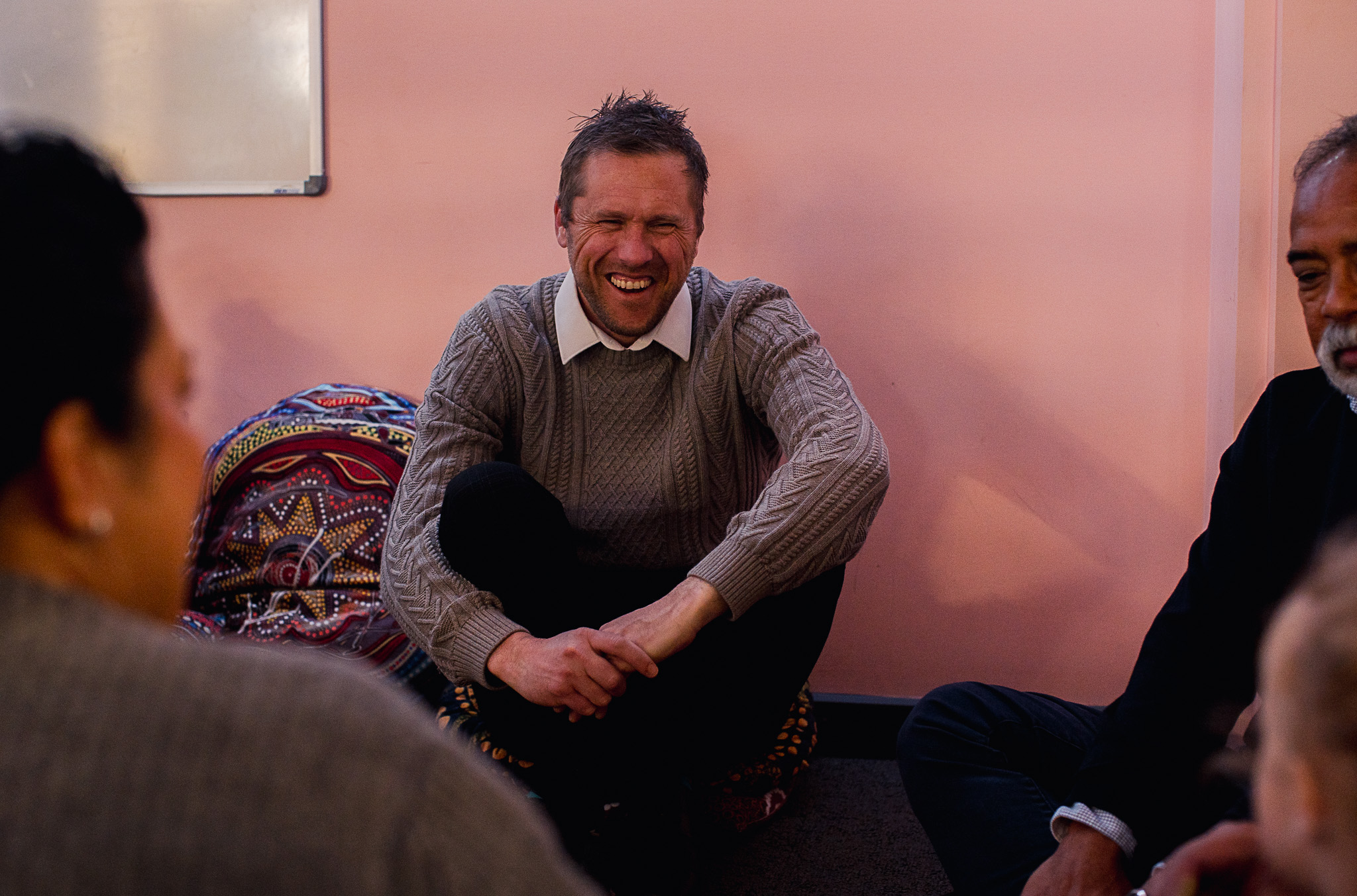
Loddon Mallee Aboriginal Reference Group (LMARG) was established in 1997 to embody self-determination in action for the Aboriginal people of the Loddon Mallee region in northwest Victoria. Members are sourced from four key Aboriginal Community Controlled Organisations (ACCOs) which service the region.
LMARG functions as a leadership forum where senior leaders of the member organisations come together in a cultural way of working based on self-determination and strength through unity. The forum provides a vital space for both government and non-government engagement and is committed to pushing boundaries to benefit their families and communities. Aboriginal boards of management are also elected by the local community.
LMARG provides effective service delivery through activities such as Bush Kinder, cultural camps, healing centres, and men’s and women’s programs to support community members, particularly Stolen Generation survivors, and young people currently in out-of-home care.
Wintjiri Wiru Working Group
Category One 2024 Finalist
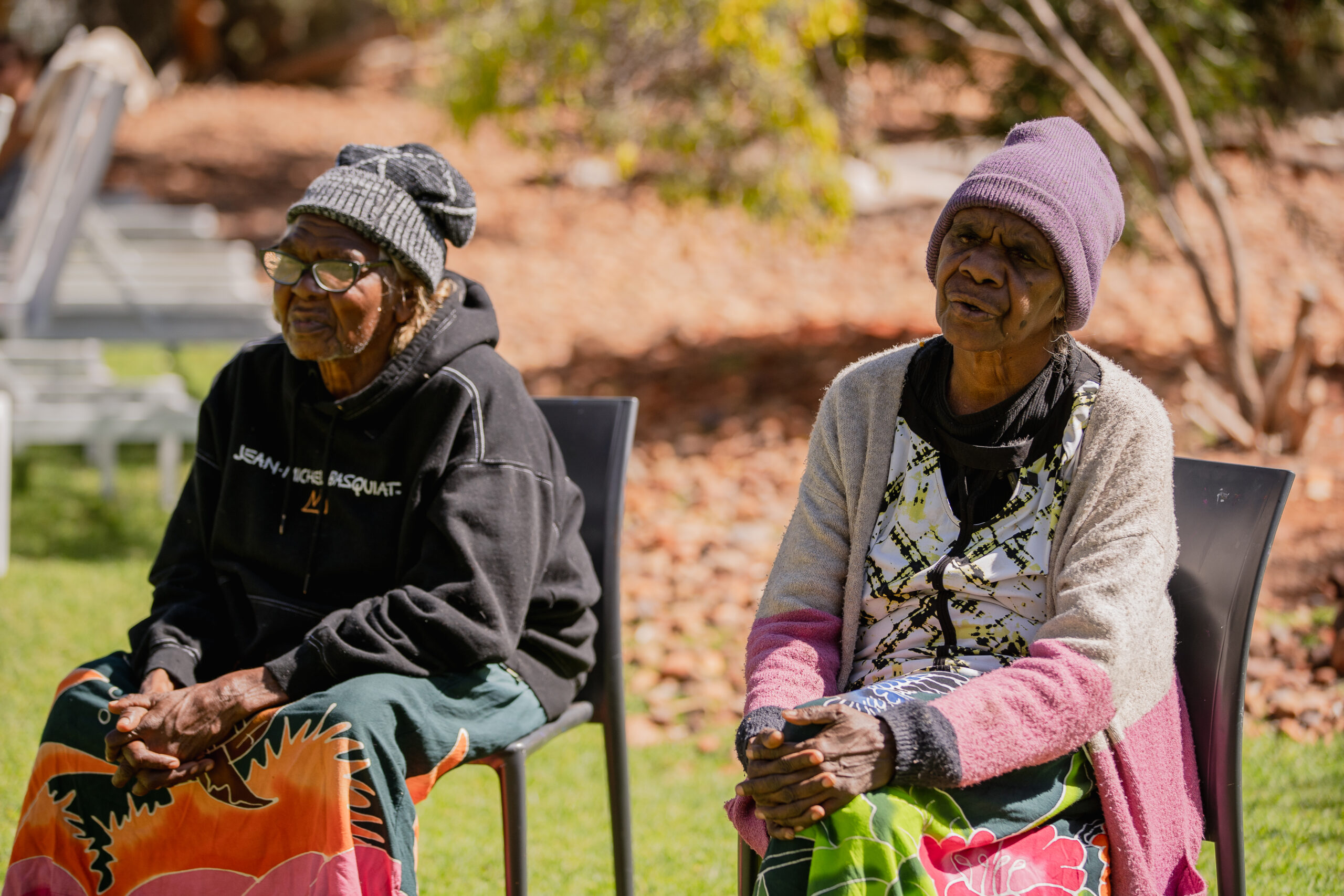
Wintjiri Wiru Working Group was established in 2020 to provide cultural authority and oversight of cultural experiences presented at the Voyages Resort near Uluru. It also manages the revenue attained from Anangu Cultural and Intellectual Property in Voyages activities.
The Working Group comprises five representatives each from the Mutitjulu and Kaltukatjara communities. Funds are distributed equally to both communities according to three categories: Cultural Strength and Capacity; Wellbeing and Social Impact, and Community Support.
The Wintjiri Wiru Visual Experience Show is their innovative approach to cultural tourism entailing a visual experience show that serves as a cultural tool for Anangu cultural values and practices, such as Caring for Country, to be passed down to future generations. The show also generates income to distribute to their communities.
The Working Group prioritises community decision-making power and autonomy in their negotiations with their tourism partner, and have implemented robust ICIP protocols that secure Anangu intellectual and cultural knowledge.
Stay connected
Subscribe to AIGI news and updates.
